VITRUVIAN LOOM
Toward a Woven Theory of Architecture
Book Manuscript
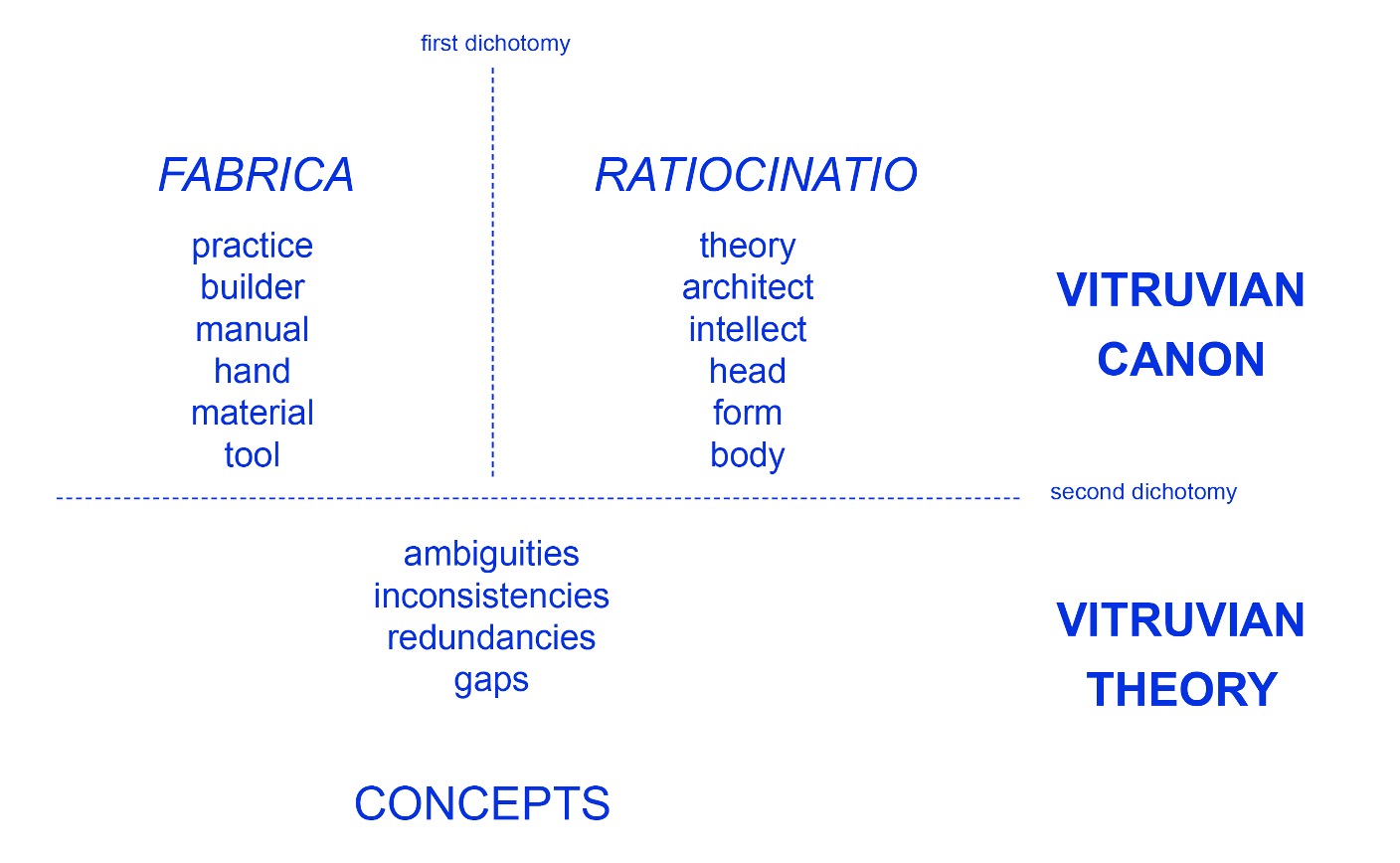
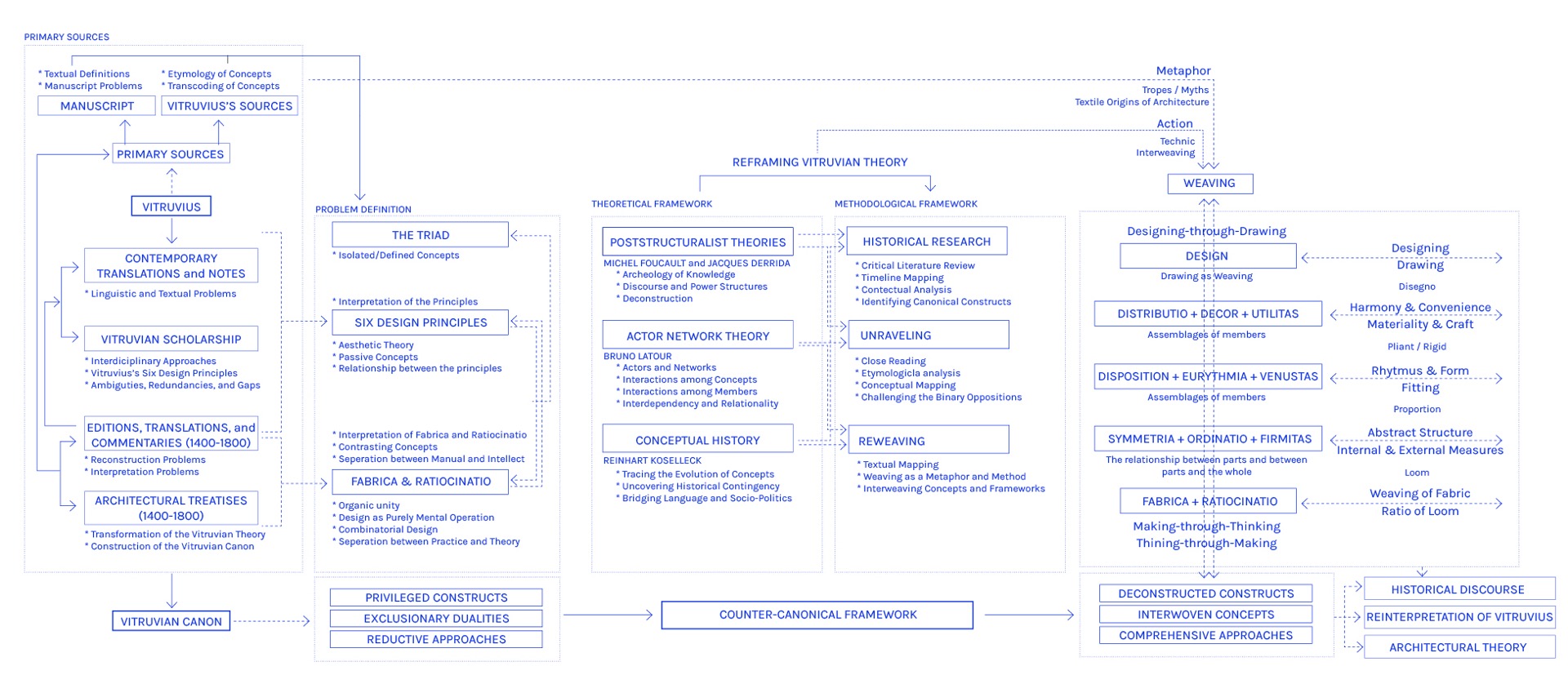
Vitruvian Loom reinterprets the foundations of Western architectural theory by placing weaving—its material practices, procedural logics, and embodied knowledge—at the center of architectural thought. Moving beyond canonical readings of Vitruvius, the book argues that architecture’s disciplinary origins have long been shaped by an unacknowledged tension between fabrica (making) and ratiōcīnātiō (thinking). Through a close rereading of De Architectura alongside ancient craft histories, textile technologies, and contemporary theory, the project reveals how architectural knowledge has been systematically abstracted from embodied labor, material intelligence, and craft ecologies.
Drawing on STS, new materialism, feminist and craft theory, and classical philology, Vitruvian Loom shows that weaving is not merely a metaphor but a methodological and epistemological framework. In antiquity, weaving structured logics of order, pattern, and proportion; in modernity, it forms the algorithmic substrate of computation through the Jacquard loom. By tracing this longue durée—from ancient looms to computational fabrication—the book demonstrates that weaving offers a richer, more entangled model of design than the abstracted figure of the solitary architect-author.
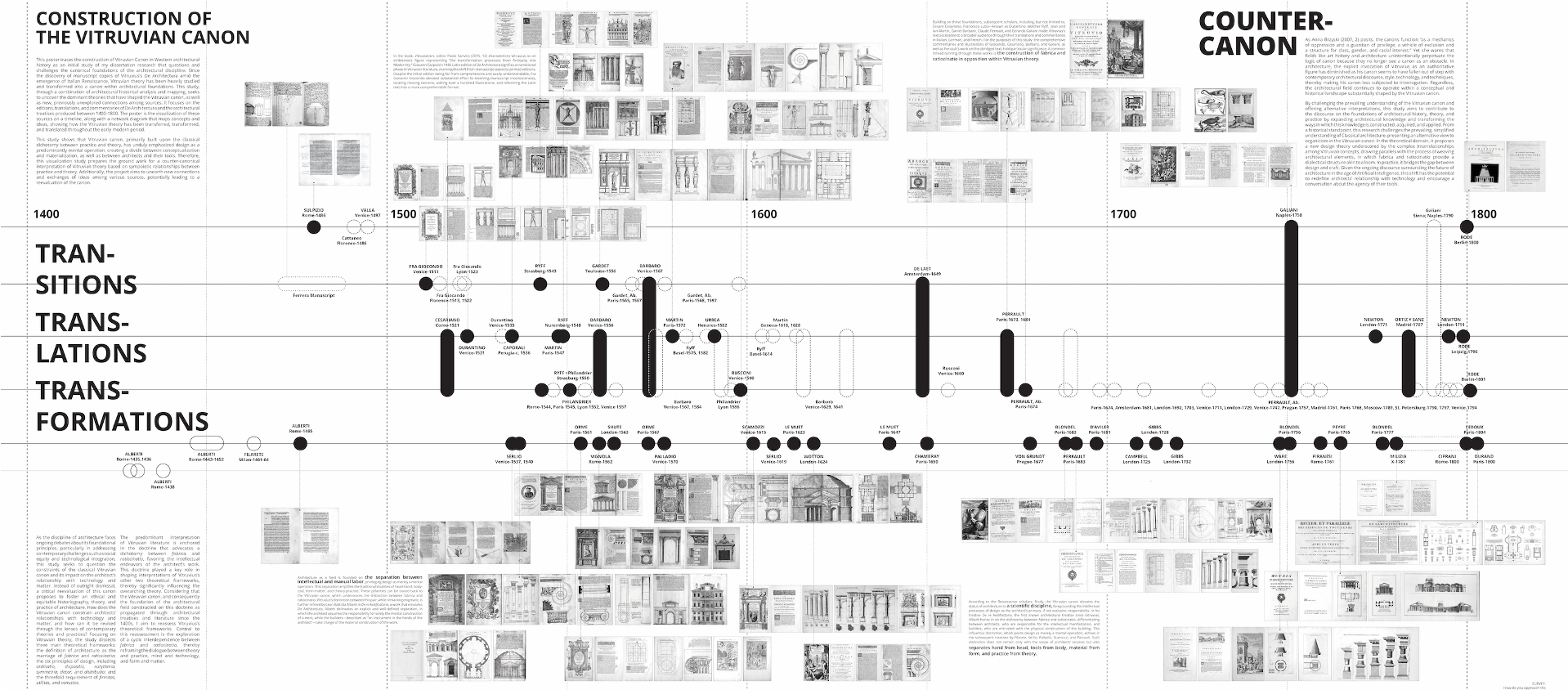
Structured as both historical critique and theoretical reconstruction, the book foregrounds the laborers, artisans, and often-overlooked actors who have shaped built environments but remain absent from canonical accounts. It analyzes how biases embedded in symbolic systems—drawings, diagrams, treatises—are re-embodied in practice, reverberating across time through materials, tools, and technologies. In doing so, Vitruvian Loom develops a woven theory of architecture: one that understands knowledge as distributed, relational, and materially situated rather than transcendent or disembodied.
Ultimately, the book reframes architecture not as a discipline founded on singular authorship and abstract rationality, but as a field constituted through the entangled processes of making, thinking, tooling, and material worlding. Vitruvian Loom offers scholars, designers, and historians a new conceptual vocabulary for understanding architecture as a textile of embodied and abstract knowledges—an onto-epistemological weave.
Drawing on STS, new materialism, feminist and craft theory, and classical philology, Vitruvian Loom shows that weaving is not merely a metaphor but a methodological and epistemological framework. In antiquity, weaving structured logics of order, pattern, and proportion; in modernity, it forms the algorithmic substrate of computation through the Jacquard loom. By tracing this longue durée—from ancient looms to computational fabrication—the book demonstrates that weaving offers a richer, more entangled model of design than the abstracted figure of the solitary architect-author.
Structured as both historical critique and theoretical reconstruction, the book foregrounds the laborers, artisans, and often-overlooked actors who have shaped built environments but remain absent from canonical accounts. It analyzes how biases embedded in symbolic systems—drawings, diagrams, treatises—are re-embodied in practice, reverberating across time through materials, tools, and technologies. In doing so, Vitruvian Loom develops a woven theory of architecture: one that understands knowledge as distributed, relational, and materially situated rather than transcendent or disembodied.
Ultimately, the book reframes architecture not as a discipline founded on singular authorship and abstract rationality, but as a field constituted through the entangled processes of making, thinking, tooling, and material worlding. Vitruvian Loom offers scholars, designers, and historians a new conceptual vocabulary for understanding architecture as a textile of embodied and abstract knowledges—an onto-epistemological weave.