BOOK CHAPTERS
“Computing Beyond the Vitruvian Canon: Ambiguity as a Catalyst in Computational Design Theory.” CAADFutures 2025, Proceeding Book [Forthcoming]
Hayri Dortdivanlioglu

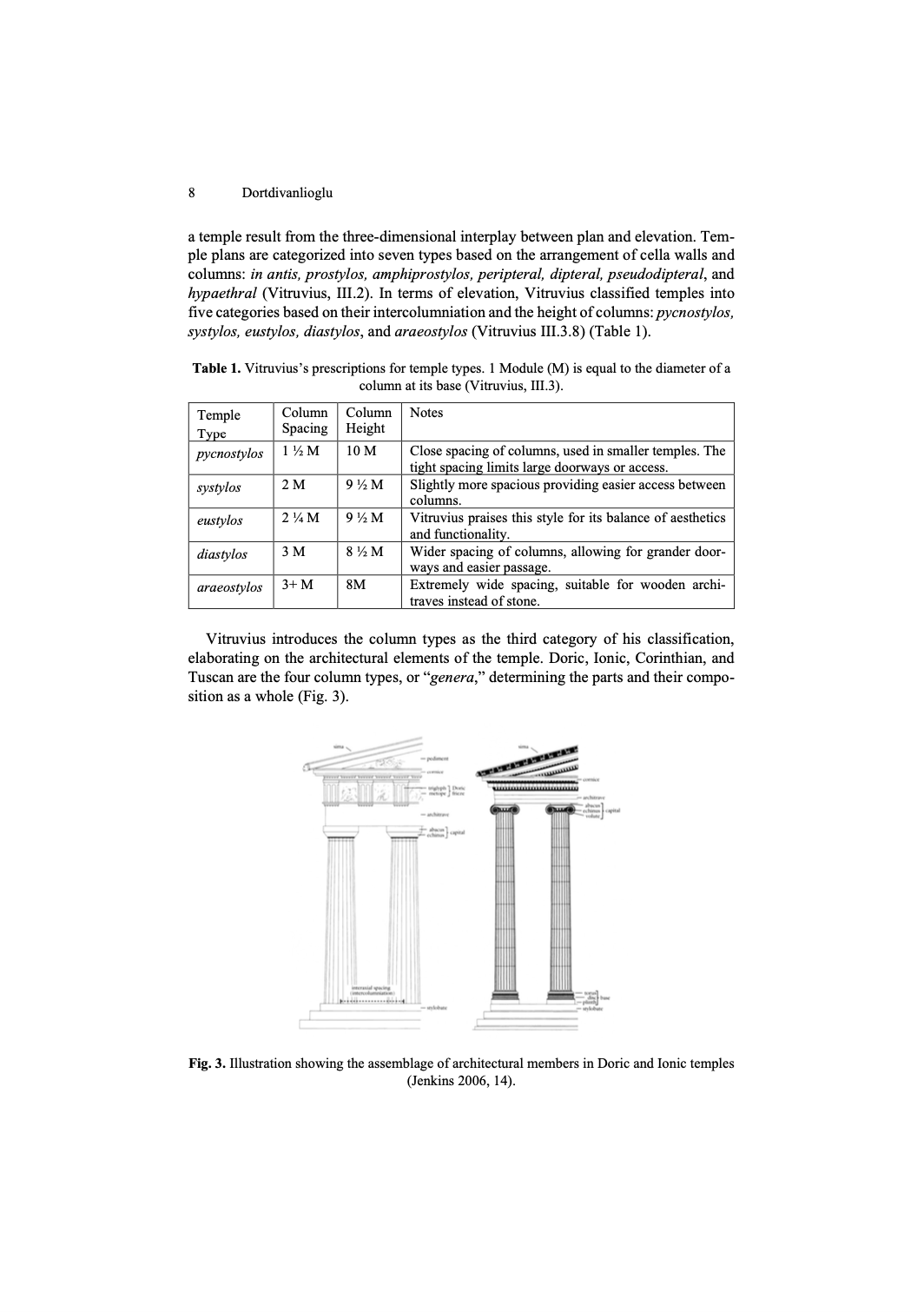

This paper reinterprets Vitruvius’s architectural theory to challenge the ca-nonical view of De Architectura as a rigid, rule-based system of Classical architecture. Traditionally, Vitruvius has been positioned as the foundation of deterministic architectural logic, emphasizing proportional and formal systems—a logic reinforced by computational design’s algorithmic formali-zation. However, this study uncovers the latent ambiguities within Vitru-vius’s prescriptions, revealing gaps, redundancies, and contextual flexibil-ity that foster dynamic and adaptive design processes. Drawing on George Stiny’s conception of ambiguity in shape grammars, this paper argues that Vitruvius’s ambiguities align with contemporary computational approach-es, where open-ended rules and iterative recalibrations enable creativity and responsiveness to context. By reframing Vitruvius’s principles as a genera-tive framework, this study bridges historical and computational design, demonstrating how ambiguity functions as a catalytic interface for innova-tion, adaptability, and interdisciplinary exchange in architecture.
“Outlining Terragni: A Riddle Reworked.” Computer-Aided Architectural Design, ed. G. Cagdas, M. Ozkar, L. Gul, E. Gurer, Springer Publication, 2017, pp. 381-395.
Hayri Dortdivanlioglu, and Athanassios Economou
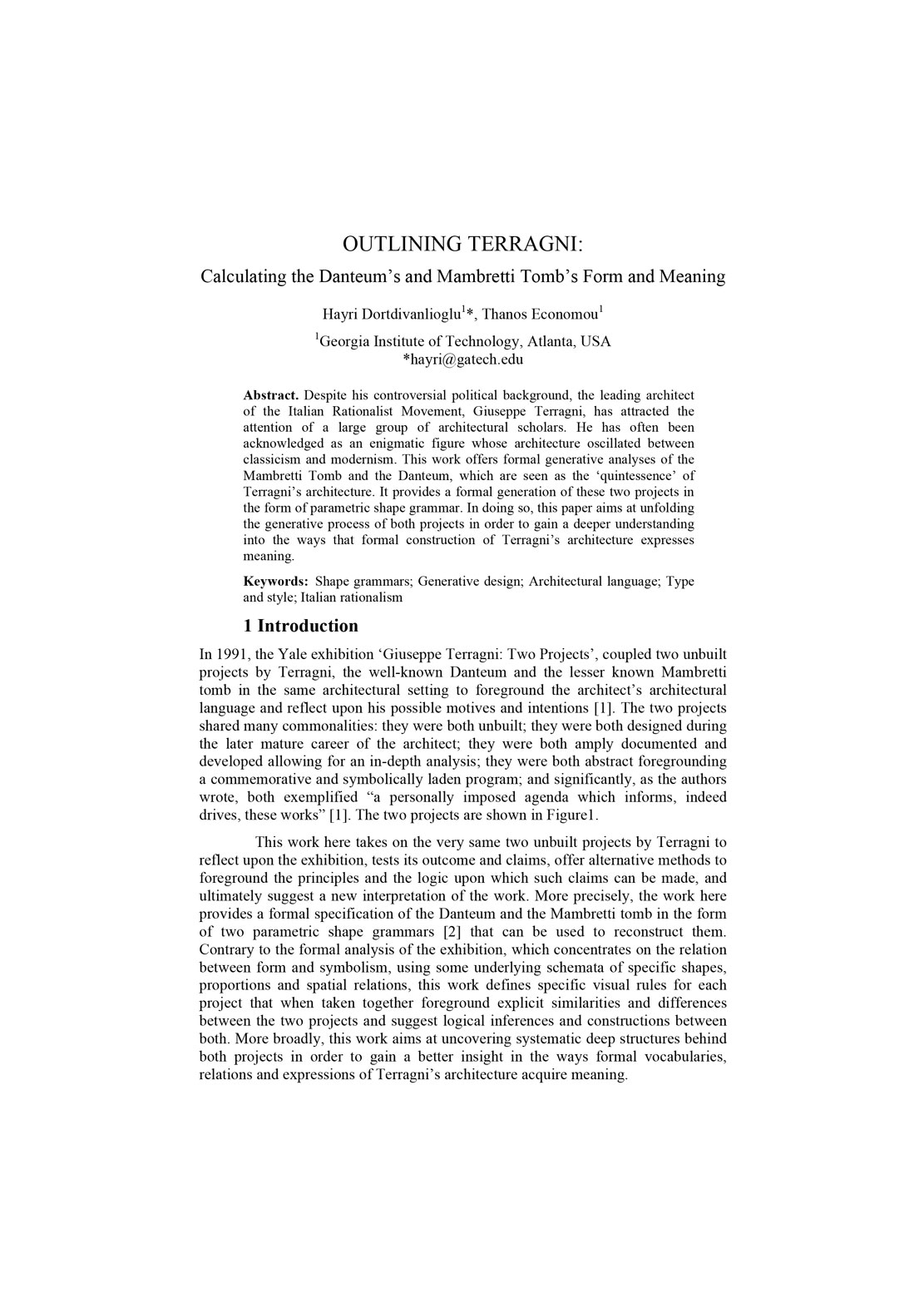
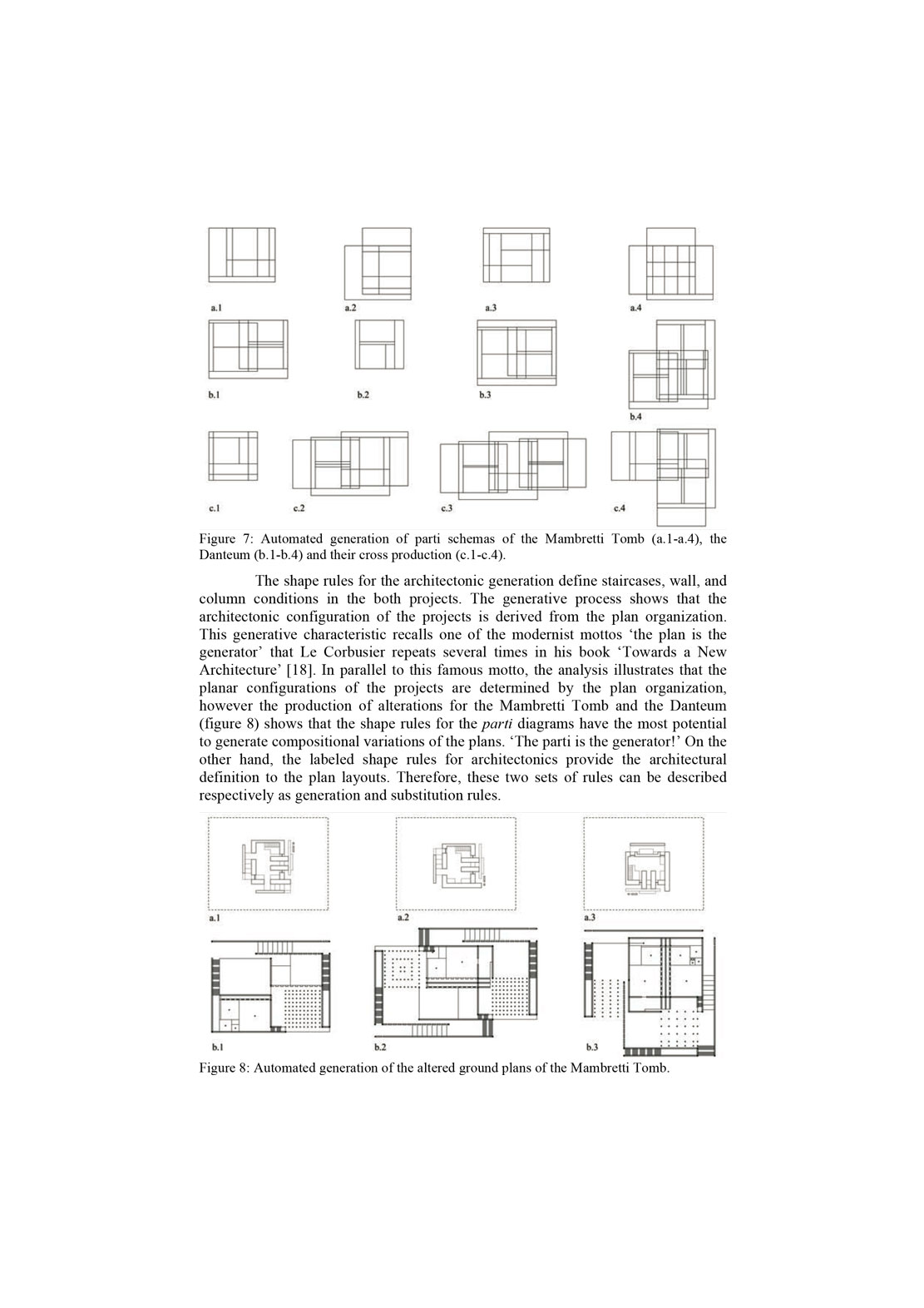
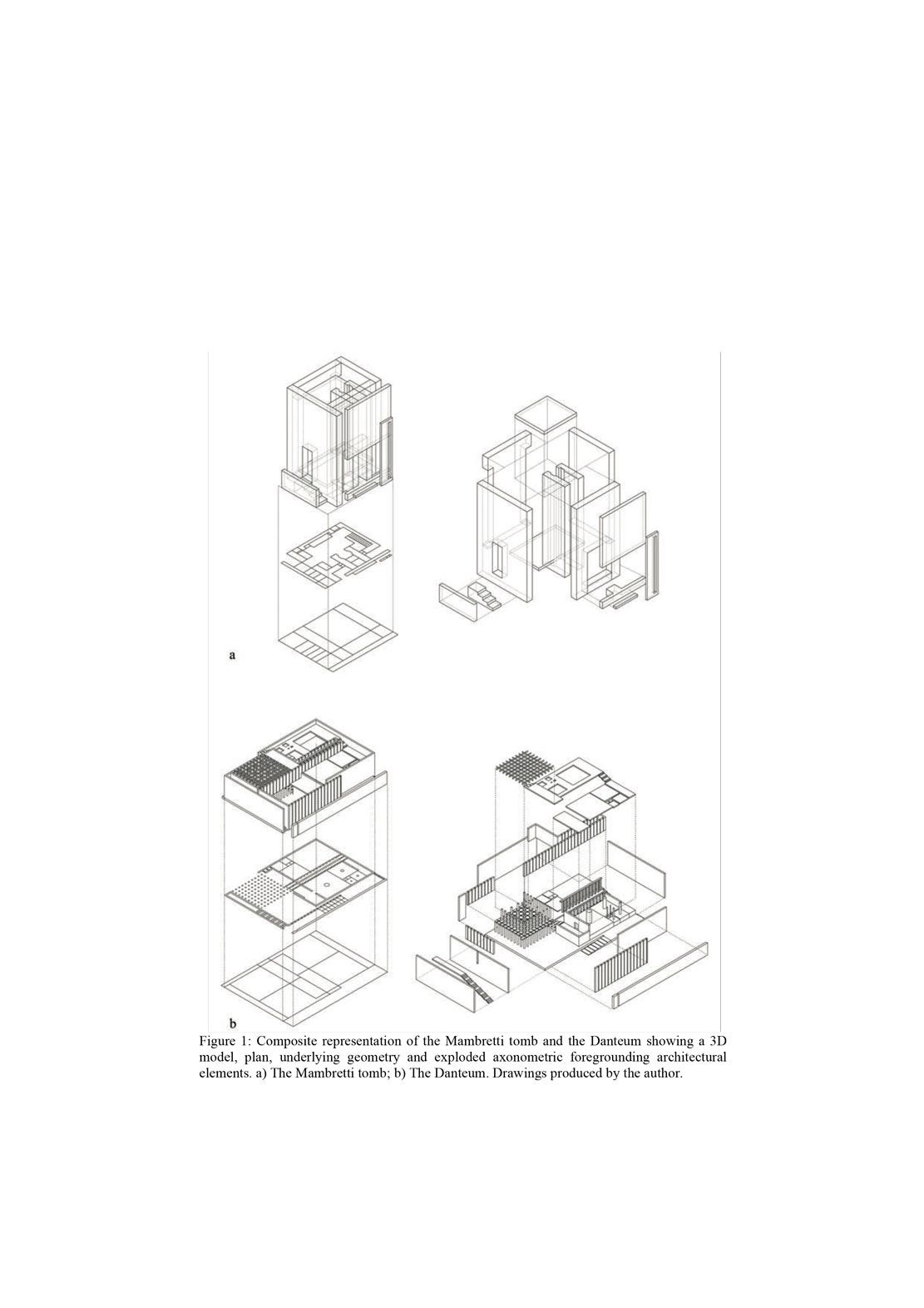
Despite his controversial political background, the leading architect of the Italian Rationalist Movement, Giuseppe Terragni, has attracted the attention of a large group of architectural scholars. He has often been acknowledged as an enigmatic figure whose architecture oscillated between classicism and modernism. This work offers formal generative analyses of the Mambretti Tomb and the Danteum, which are seen as the ‘quintessence’ of Terragni’s architecture. It provides a formal generation of these two projects in the form of parametric shape grammar. In doing so, this paper aims at unfolding the generative process of both projects in order to gain a deeper understanding into the ways that formal construction of Terragni’s architecture expresses meaning.
“Eko-Morfoloji.” Ankara Kent Atlası, ed. Güven A. Sargın, Chamber of Architects of Turkey, Ankara Branch Publishing, Ankara, February 2012, pp. 88-97.
Hayri Dortdivanlioglu, Utku Karakaya, Ensar Temizel
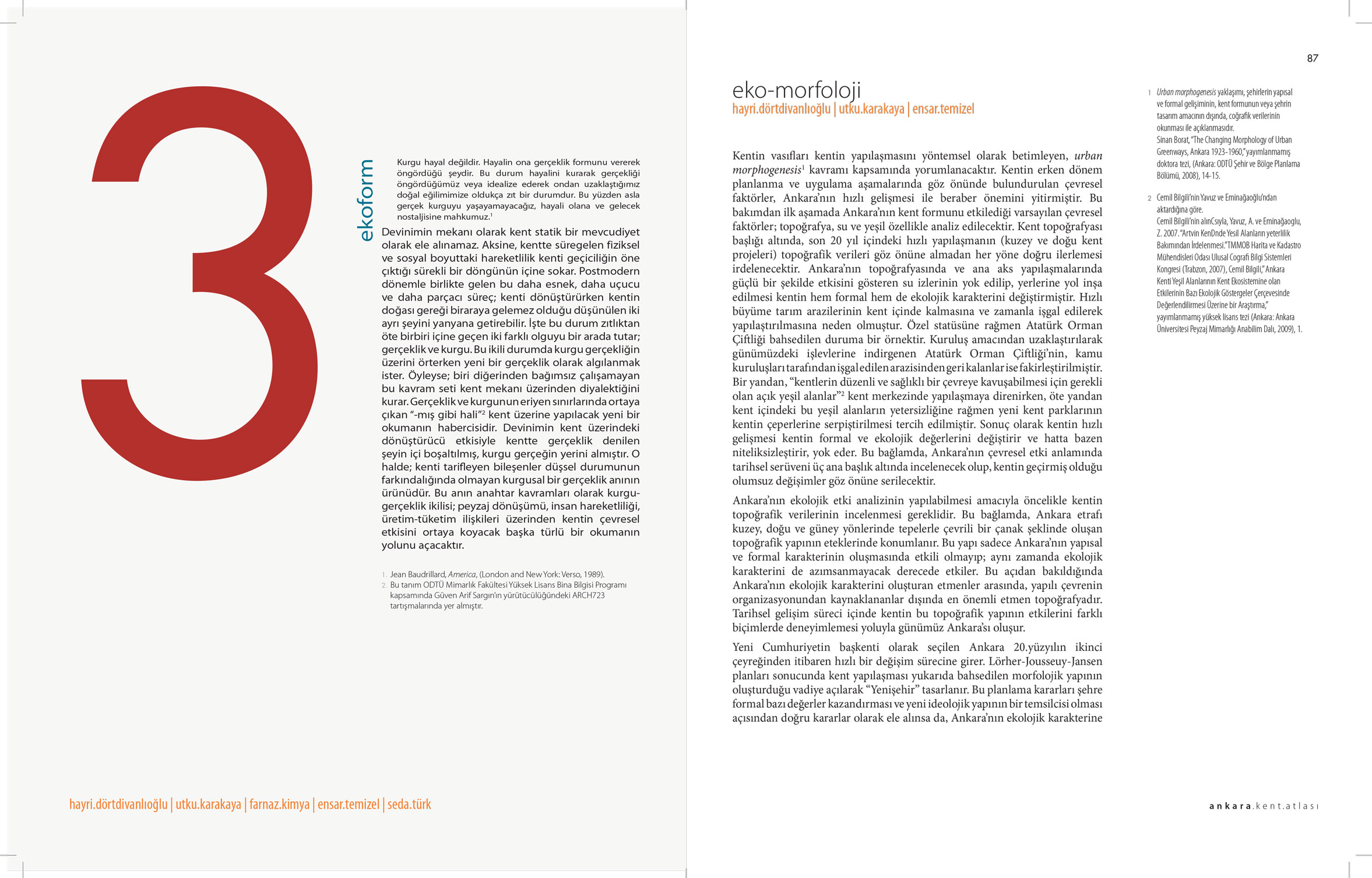
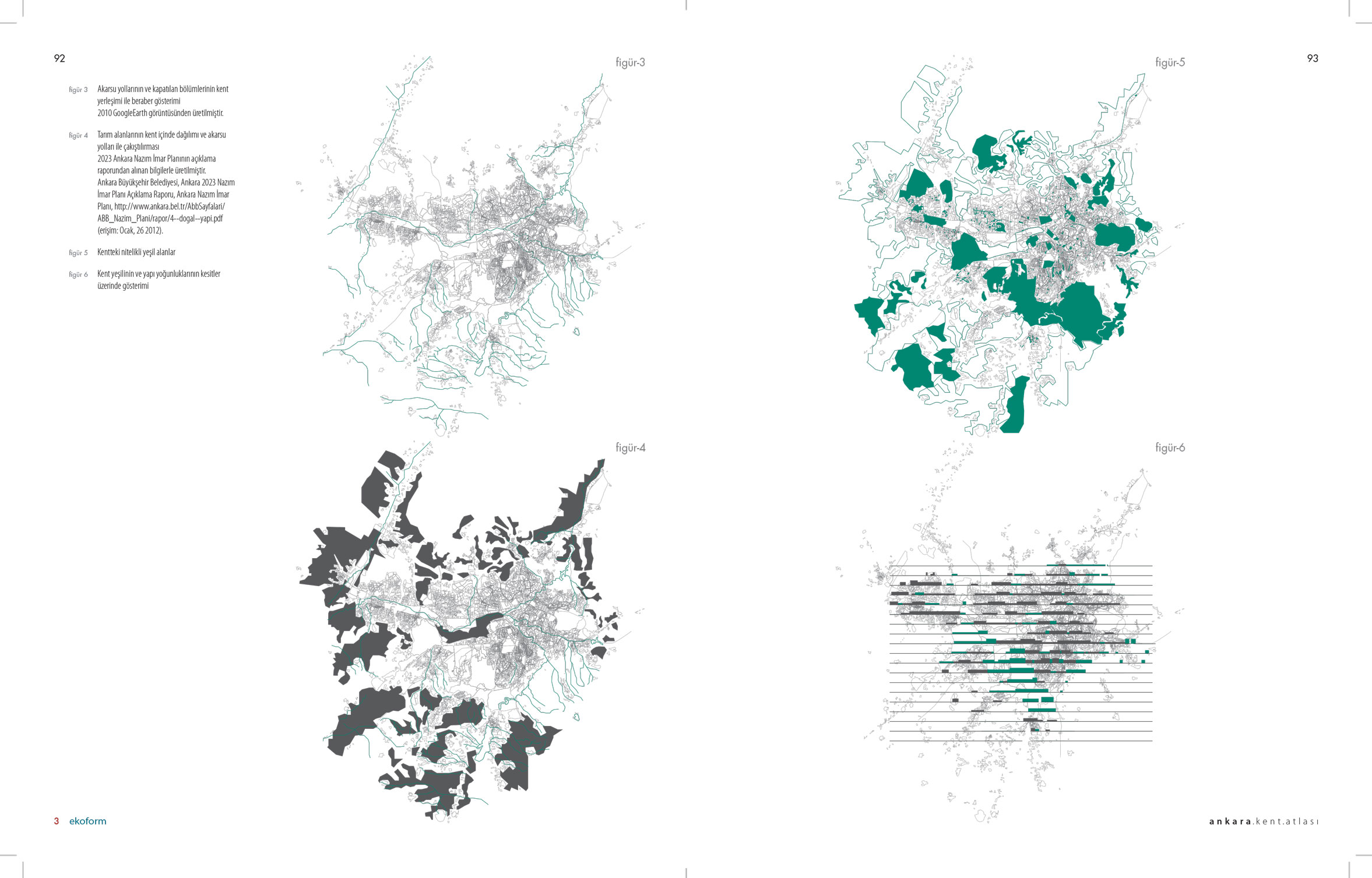
Ankara’nın ekolojik etki analizinin yapılabilmesi amacıyla öncelikle kentin topoğrafik verilerinin incelenmesi gereklidir. Bu bağlamda, Ankara etrafı kuzey, doğu ve güney yönlerinde tepelerle çevrili bir çanak şeklinde oluşan topoğrafik yapının eteklerinde konumlanır. Bu yapı sadece Ankara’nın yapısal ve formal karakterinin oluşmasında etkili olmayıp; aynı zamanda ekolojik karakterini de azımsanmayacak derecede etkiler. Bu açıdan bakıldığında Ankara’nın ekolojik karakterini oluşturan etmenler arasında, yapılı çevrenin organizasyonundan kaynaklananlar dışında en önemli etmen topoğrafyadır. Tarihsel gelişim süreci içinde kentin bu topoğrafik yapının etkilerini farklı biçimlerde deneyimlemesi yoluyla günümüz Ankara’sı oluşur.